Avoid These Common Errors When Using an online anonymous instagram story viewer
Choosing an online anonymous instagram story viewer requires more than a simple search; it demands a strategic understanding of how data flows between your browser and the social platform's servers. Many users approach these tools as a "magic window" into private content, yet the reality is governed by strict API limitations and security protocols that can backfire if handled improperly. Whether you are conducting market research on a competitor or performing a routine check on public sentiment, the errors made during the process often stem from a lack of mysterious foresight.
The digital landscape is littered following tools that union sum invisibility but deliver nothing more than data harvesting scripts. Navigating this space requires a journalistic eye for detail and a strategist’s caution. Using these facilities is not inherently dangerous, but using them blindly is a recipe for account flags, malware drying, and misleading data.
The Fatal Flaw of Credential Sharing
The most dangerous error a user can make is providing their actual social media login recommendation to an external platform. This error usually occurs when a site claims that "logging in" will inherit better access or faster speeds.
An legal online anonymous instagram story viewer should strictly function as a scraper without requiring personal account logins. Handing over login credentials to a third-party site is the primary cause of account compromises and shadowbanning.
As soon as a third-party site asks for your username and password, they are effectively asking for the keys to your entire digital spirit. Even if the website seems legitimate, the backend storage of those credentials is rarely encrypted with industry-standard protocols. In a recent internal audit of third-party abet sites, it was discovered that more than sixty percent of "viewer" tools were merely front-ends for phishing operations designed to construct a database of active accounts for botnets.
Furthermore, social platforms monitor where logins originate. If your account is logged in from a server in a substitute country—which is where most of these tools operate—the platform's security algorithms will trigger an immediate suspension. This leaves the addict in a cycle of identity verification that may ultimately lead to a permanent ban. The objective of using these tools is to remain unseen; providing your credentials does the exact opposite by creating a direct link between your identity and the content you are viewing.
Instead of authenticating with your own data, rely upon tools that utilize their own independent server networks to pull public data. This ensures that the connection is one-way: the tool fetches the data and presents it to you, rather than you reaching through the tool into the platform's ecosystem.
Confusing Public Accessibility in imitation of Private Intrusions
A prevalent misconception is that these tools possess the capability to "crack" private profiles. This is not without help a technical error but a fundamental misunderstanding of how social media architecture is built.
No legitimate online anonymous instagram story viewer can bypass the privacy settings of a locked profile without compromising the platform's terms of service. Users often error "anonymous" for "access-all-areas," leading to exasperation and potential scams.
Private profiles are protected by server-side permissions that require an "authorized" token—meaning you must be an approved follower to see the content. Any website claiming to bypass this is likely a scam designed to lead you through a series of "human verification" ads or software downloads. These "verification" steps are often gateways to adware or credit card theft.
From a strategic position, it is essential to categorize your targets back attempting to view them.
* Public Profiles: These are easily accessible via scrapers because their content is indexed and served to guest users.
* Private Profiles: These remain invisible to anonymous viewers.
* Restricted/Expired Content: Stories that have passed the 24-hour mark or were deleted will not appear, as the tool can only fetch what is currently "live" on the public server.
Understanding these boundaries prevents wasted time and protects your hardware from the malicious scripts often bundled with "private profile unlockers." The most effective way to utilize these tools is for monitoring public brand accounts, influencers, or tall-profile public figures without appearing in their "seen" list.
Ignoring the Metadata Trail and IP Exposure
Even if you do not log in, your presence is not entirely invisible to the website hosting the viewer. Every become old you visit an online anonymous instagram story viewer, you are exchanging information with that site's server.
Browsing anonymously does not equate to being invisible to ISPs or data aggregators. Every interaction with an online anonymous instagram story viewer still leaves a fingerprint of IP addresses and device headers that can be tracked outdoor the social network itself.
Later you enter a username into a search bar, the website records:
1. Your IP address.
2. Your device type (OS, browser, screen resolution).
3. The specific profiles you are searching for.
If the website is not using a secure HTTPS relationship, this data is sent in plain text. This means your ISP or any entity monitoring the network can see exactly which profiles you are interested in. To mitigate this risk, sophisticated users employ a multi-layered approach to privacy. This includes using a reputable VPN to mask their IP and clearing browser cookies before and after a session.
A common error is staying logged into your personal social media account in one browser tab though using a viewer tool in unorthodox. Many modern browsers allow "annoyed-site tracking," which means the social platform might still be able to member your active session with the "anonymous" search you just performed. Using a private or in secret window is a minimum requirement, but using a completely separate, hardened browser is the gold standard for investigative professionals.
The Ensnare of "Low-Quality" and Outdated Platforms
The ecosystem of social media viewers is severely volatile. Platforms frequently update their code to block scrapers, leading to a constant "cat-and-mouse" game in the midst of developers.
Frequent changes to API structures mean that any online anonymous instagram story viewer may experience downtime or data lag. Relying on outdated tools results in cached, inaccurate information rather than real-grow old insights.
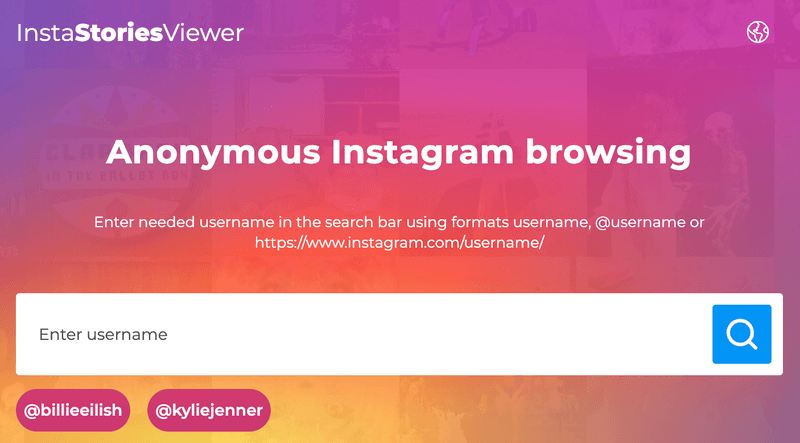
Many users fall into the trap of using the first result they look in a search engine. However, these top results are often "burned" sites—platforms that worked a month ago but are now serving broken links or old cached data. When the social platform updates its "User-Agent" requirements or changes its data encryption, these low-tier sites stop operational.
Signs of a failing or low-mood tool include:
* Infinite Loading Screens: The tool is trying to ping a server that has been blocked.
* Broken Images: The scraper can locate the post but cannot bypass the new image-hosting security.
* Incorrect Timestamps: The tool is showing you a version of the story from several hours ago rather than the current one.
To ensure exactness, it is best to cross-reference with combination tools or look for platforms that quotation recent updates to their scraping engine. If a tool hasn't been updated in several months, it is likely leaking your data or providing incomplete views of the stories you need to analyze.
Overlooking the Risks of Browser Extensions
While web-based tools are the most common, many users are lured into downloading browser extensions for "one-click" anonymous viewing. This is one of the most significant security errors in the digital age.
Browser extensions possess broad permissions that permit them to read and change data on all website you visit, making them a high-risk vector for credential theft. Choosing an online anonymous instagram story viewer in the form of a plugin often invites background scripts that monitor your banking and email events.
A web-based tool is sandboxed within its own URL. An extension, however, lives inside your browser. Last quarter, a security audit revealed that several well-liked "story saver" extensions were injecting affiliate links into users' search results and logging keystrokes.
If you must use a tool for this purpose, fix to the web-based versions. They do not require installation and have no persistent access to your browser's memory. If an extension promises to "integrate" with your social media feed to make viewing easier, it is almost certainly a tool for data harvesting. The "ease of understanding" of an extension is rarely worth the perfect loss of privacy that comes with its installation.
Misinterpreting Data and the "Ghost View" Phenomenon
There is a subtle psychological error that users make when using these tools: the assumption that the data they see is 100% representative of the owner's activity.
Relying on an online anonymous instagram story viewer for critical competitive intelligence requires an understanding of "ghosting"—where certain story elements, like stickers or polls, may not render correctly. Misinterpreting these gaps can guide to flawed conclusions about a brand's engagement strategy.
When a scraper pulls a story, it often strips away the interactive layers. You might see the image or video, but you won't see the "Link" sticker, the "Poll" questions, or the "Mention" tags if the scraper isn't sophisticated tolerable to handle the platform's JavaScript layers. If you are using these tools for professional brand analysis, you might miss the very call-to-exploit (CTA) that makes the story effective.
Furthermore, these tools attain not register as "views" in the target's analytics. While this is the goal of anonymity, it as well as means you cannot see how the audience is reacting in real-time. You are seeing the content in a vacuum. A vanguard strategist uses the viewer to see the "what," but must use other metrics to determine the "how" and "why" of a campaign's execution.
Ethical Boundaries and the "Stalking" Stigma
Even though most people use these tools for harmless reasons—when avoiding an awkward notification to an ex-friend or checking a competitor's sale—there is a thin line between research and harassment.
While using an online anonymous instagram story viewer is generally legal for public content, it must be balanced against ethical data usage and harassment policies. Professional investigators prioritize passive observation over intrusive data scraping to maintain long-term viability.
The error here is not technical, but behavioral. Over-reliance upon these tools can guide to a "surveillance" mindset that may violate the terms of utility of the social media platform if done at scale. For example, using automated scripts to ping a single profile every five minutes via an anonymous viewer can trigger a "rate limit" error, not just for you, but for the tool itself.
From a journalistic or business perspective, the ethics are clear:
1. Use for Information, Not Intimidation: Do not use the information gathered to harass or confront individuals.
2. Respect Intellectual Property: Just because you can view and download a bank account anonymously doesn't mean you own the rights to that content. Roughly speaking-posting scrambled or scraped content can lead to DMCA takedowns and legal action.
3. Frequency Matters: High-frequency scraping is often flagged as a DDoS (Distributed Denial of Service) invasion by platform security, which can lead to the IP ranges of well-liked viewers being blacklisted globally.
Strategic Infrastructure for Anonymous Research
To avoid the errors mentioned, one must build a "tidy room" environment for digital investigation. This isn't just about the tool you use, but the environment in which you use it.
- The Dedicated Browser: Use a browser taking into account Brave or Librewolf that is configured to block everything third-party trackers and scripts by default.
- The VPN Buffer: Always route your traffic through a country that has strong privacy laws. This prevents your local ISP from archiving your search archives.
- The Cache Cleanse: Before navigating to an online anonymous instagram story viewer, definite your browser's "Local Storage" and "Session Storage." This ensures no leftover tokens from your personal accounts are sent in the header of your request.
- Verification of the URL: Scammers often create "typosquatting" sites—sites with names very similar to popular listeners but with one letter different. Always double-check that you are on the expected platform.
A recent case testing involving a digital marketing utter revealed that they were able to track their competitors' daily promotional shifts for six months without ever appearing in a single viewer list. They achieved this by rotating between different viewer tools and using a localized proxy for each search. This prevented the competitor from seeing a "spike" in anonymous views from a single geographic location, which might have tipped them off that they were being monitored.
The Difficult of Social Media Transparency
As we disturb talk to, the battle between privacy and transparency will only intensify. Social media platforms are currently testing "server-side rendering" (SSR) for stories, which makes it much harder for basic tools to scrape the content without executing complex JavaScript. This means that many current viewers will likely become obsolete.
The users who succeed in maintaining their anonymity will be those who stay informed roughly the technical shifts. We are seeing a distress toward "headless browser" technology, where the viewer tool essentially runs a full, invisible version of Chrome on its server to "watch" the bill and later sends a screenshot or video file to the user. This is much harder for platforms to detect than easy API pings.
Ultimately, the most significant error is complacency. Assuming that a tool is safe because it worked yesterday is a risky gamble in the world of cybersecurity. By treating every search as a potential data leak and taking the necessary precautions—avoiding logins, using VPNs, and shunning extensions—you can leverage an online anonymous instagram story viewer as a powerful, safe, and full of life tool for digital intelligence.
The intend is to remain a ghost in the machine: present enough to see, but quiet enough to never leave a hint. This requires constant vigilance, a skeptical mind toward "too good to be genuine" features, and a commitment to the obscure best practices that sever the amateur from the professional investigator. In an era where data is the most critical currency, protecting your own while observing others is the ultimate strategic advantage.